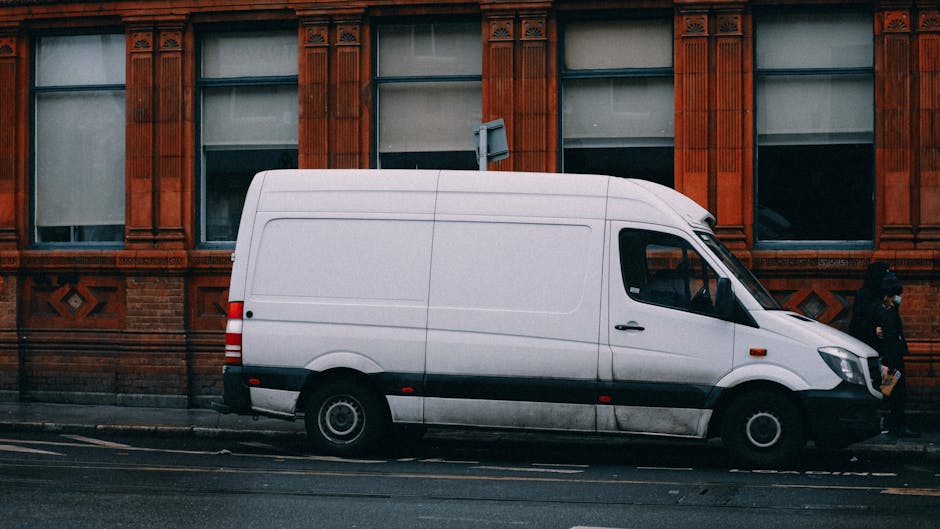
Old Street to Hoxton Routes for Van Drivers: A Practical Local Guide
If you drive a van through East London, you already know the difference between a straightforward drop-off and a job that slowly turns into a stress test. The Old Street to Hoxton routes for van drivers are short on the map, but in real life they can involve traffic pinch points, awkward loading spots, timed access, cyclists appearing from nowhere, and the general "London shuffle" that every driver learns to respect. This guide breaks it down properly: how the routes work, what makes them tricky, and how to plan them in a way that saves time, fuel, and a fair bit of faff.
Whether you are moving a flat, delivering furniture, handling office equipment, or running a same-day collection, the right route choice matters. Small details add up. A better arrival window. A smarter parking plan. The right van size. Even the order you load the van can change how the day feels. Let's get into it.
Table of Contents
- Why Old Street to Hoxton routes for van drivers Matter
- How Old Street to Hoxton routes for van drivers Works
- Key Benefits and Practical Advantages
- Who This Is For and When It Makes Sense
- Step-by-Step Guidance
- Expert Tips for Better Results
- Common Mistakes to Avoid
- Tools, Resources and Recommendations
- Law, Compliance, Standards, or Best Practice
- Options, Methods, or Comparison Table
- Case Study or Real-World Example
- Practical Checklist
- Conclusion
- Frequently Asked Questions
Why Old Street to Hoxton routes for van drivers Matter
On paper, Old Street and Hoxton sit close together. In practice, that short distance can behave very differently depending on the time of day, the street you need, and whether you are carrying anything awkward like a sofa, a desk, or a piano. Van drivers working this corridor often deal with a mix of busy junctions, residential streets, commercial loading demands, and a lot of moving parts in a small area.
This matters because route decisions affect almost every part of the job:
- how quickly you reach the property
- whether you can stop safely and legally
- how much walking distance your crew has from van to door
- how likely you are to hit delays from traffic or road works
- how smoothly you can coordinate collection and delivery timing
For customers, this can be the difference between a move that feels calm and one that feels like it is dragging on forever. For drivers, it can mean less wasted time and fewer headaches. Truth be told, in London the shortest route is not always the best route.
If you are handling local removals, it also helps to think beyond the road itself. Access, property type, stair carries, parking restrictions, and whether you need help with heavy items all shape the route plan. That is why services such as man and van support in Hoxton or a dedicated removal van in Hoxton can be useful when the job needs a more organised approach.
How Old Street to Hoxton routes for van drivers Works
The route itself is usually less about one single road and more about choosing the smartest path for the conditions on the day. Some jobs start near Old Street Station, where traffic builds quickly and stopping space is limited. Others begin deeper into the side streets, where a van can be parked only briefly and a careful loading plan becomes essential.
Most van drivers working between these areas think in layers:
- Set the pickup and drop-off points precisely, not just the postcodes. A few doors can make a big difference on a narrow street.
- Check access constraints such as width, turning room, height limits, one-way systems, and any local loading restrictions.
- Choose the vehicle size based on the cargo and parking reality. Bigger is not always better if the street is tight.
- Decide the loading sequence so the first items out are not buried under everything else.
- Build in time for the unexpected because, in this part of London, "just five more minutes" can become ten if you are unlucky.
There is also the human side of the route. A ground-floor flat with easy access is one thing. A third-floor walk-up with a mattress, a bookshelf, and a nervous customer watching the clock is another. If you are moving household goods, useful prep pages like packing belongings safely and efficiently and decluttering before moving can make the route easier before the van even starts moving.
Key Benefits and Practical Advantages
The obvious benefit of a well-planned route is time saved. The less obvious benefit is mental bandwidth. When a driver knows the plan, there is less last-minute guessing and fewer awkward calls from the pavement. That calm matters. It really does.
Here are the main practical advantages:
- Fewer delays: Better route choice reduces the risk of being caught out by congestion, busier junctions, or a blocked loading bay.
- Safer stops: Good planning helps you choose stopping points that are more secure for loading and unloading.
- Lower handling risk: Shorter carries and better access reduce strain on backs, shoulders, and furniture corners.
- Better customer experience: Arriving when expected and unloading efficiently creates a far smoother move.
- More efficient schedules: Local jobs often stack up throughout the day, so one smooth run can protect the whole timetable.
There is another practical upside too: route familiarity builds judgment. After a few regular trips between Old Street and Hoxton, drivers start to notice which side streets are friendlier for vans, where visibility drops, and which turns feel tight enough to deserve extra care. That kind of lived-in knowledge is hard to fake and very useful when you are handling house removals in Hoxton, flat removals in Hoxton, or even a quick one-item collection.
Who This Is For and When It Makes Sense
These routes are useful for a wide range of people, not just full removal crews. If you work in transport, deliveries, or small-scale logistics around East London, the same route logic applies.
This guide is especially relevant for:
- van drivers handling local moves between Old Street and Hoxton
- man and van operators covering same-day jobs
- students moving into or out of shared accommodation
- office teams shifting equipment, boxes, and small furniture
- furniture delivery drivers who need reliable access and fast turnaround
- customers booking same-day removals in Hoxton
It also makes sense if you are moving just one awkward item. A sofa, a wardrobe, a desk, a mattress, or a piano can all create route problems because access matters as much as the cargo. For larger or specialist items, pages like furniture removals in Hoxton and piano removals in Hoxton are worth reading alongside this guide.
And if you are a customer trying to decide whether to do it yourself or hire help, ask one simple question: is the van the main challenge, or is the access the main challenge? If access is difficult, professional support starts to look a lot more sensible.
Step-by-Step Guidance
Here is a practical way to plan the journey from Old Street to Hoxton without turning it into a drawn-out saga.
1. Confirm the exact addresses
Do not rely on broad area names alone. Old Street and Hoxton cover a dense patch of London, and even a small postcode difference can mean a very different street layout. Confirm flat numbers, building entrances, and whether the loading point is on the same side of the road.
2. Check the cargo before choosing the van
Think about size, shape, and fragility. A stack of boxes is easy enough. A mattress, a mirrored wardrobe, or a heavy desk is a different story. If the move involves items that need careful wrapping or secure stacking, it helps to review bed and mattress transportation tips before you set off.
3. Plan the loading order
Load items you will need first near the rear or in a clearly reachable position. That sounds obvious, but in the middle of a busy day it is very easy to stack things in the order they arrive and then regret it later. We have all seen that moment where the one box you need is somehow buried under a lamp, two chairs, and a roll of bubble wrap.
4. Choose the route with stopping space in mind
The route should support the stop, not just the drive. A slightly longer drive can be worth it if it gives you a cleaner unloading point. For a lot of jobs, this is the difference between a ten-minute carry and a two-minute one. That matters more than people think.
5. Protect the property and the load
Use blankets, straps, trolleys, and corner protection where needed. If you are moving furniture or a mixed household load, a bit of planning up front prevents scuffs, bruises, and damaged finishes later. That includes surfaces in the property as well as the items themselves.
6. Confirm completion and next steps
At drop-off, check the items against the brief, make sure nothing is left behind, and confirm whether the customer needs help placing items in specific rooms. A small amount of care at the end tends to be remembered. Funny how that works.
Expert Tips for Better Results
Good route planning is part logistics, part observation, and part discipline. The experts tend to do a few simple things consistently, not dramatically. No magic tricks. Just solid habits.
- Leave early enough to absorb one surprise. Not three surprises. One.
- Use short reconnaissance if needed. A quick look at the destination street can save you from a bad loading guess.
- Keep heavy items low and balanced. This helps with braking and cornering on London roads.
- Use proper lifting technique. If you are doing manual handling, it is worth revisiting kinetic lifting guidance and tips for lifting heavy items safely.
- Carry protective materials in the van. Blankets, straps, gloves, and mattress covers are basic, but they save jobs.
- Build in customer communication. A quick text or call with arrival timing often prevents confusion and repeated waiting around.
For bigger or more awkward jobs, it can help to split the day into mini stages: collection, route, unloading, final check. That simple structure keeps everyone calm. If you want a broader view of how that fits into a full move, the guide on a calm house move is a useful companion read.
Expert summary: the best route is usually the one that gives you the safest stop, the cleanest carry, and the least amount of rushing. Not always the shortest line on a map. That is the local trick, really.
Common Mistakes to Avoid
The biggest errors on Old Street to Hoxton jobs are usually very ordinary ones. That is what makes them annoying.
- Assuming the route is too short to need planning. Short runs still get tangled by congestion or access issues.
- Choosing a van that is too large. Bigger vehicles can become a problem on narrow streets or busy corners.
- Ignoring loading restrictions. A legal stopping point matters more than convenience.
- Underestimating awkward items. A single sofa can disrupt an otherwise neat schedule.
- Failing to check weather and road conditions. A wet day changes handling, visibility, and loading pace.
- Not protecting fragile or upholstered items. One bad scrape can cost more time than the whole journey saved.
There is also a subtle mistake many people make: packing too much into the day. If you are doing a move, decluttering first can make the whole route easier. It is worth reading the decluttering guide before moving and, if you are near the end of a tenancy, the piece on move-out cleaning hacks. Less clutter, less stress. Simple, but effective.
Tools, Resources and Recommendations
The right kit makes local route work much smoother. Nothing flashy. Just reliable gear and clear information.
Useful van and moving tools
- ratchet straps for securing mixed loads
- removal blankets for furniture protection
- trolley or sack truck for heavy boxes and appliances
- gloves with a good grip
- mattress bags and furniture covers
- phone navigation with live traffic updates
Useful planning resources
- packing and boxes in Hoxton for organising items before the van arrives
- storage in Hoxton if the move needs a temporary holding plan
- services overview to compare support options for different types of jobs
- man with a van in Hoxton if you want a flexible local option
- pricing and quotes if you want to understand how bookings are usually arranged
If you are moving items that need extra care, support pages about insurance and safety can help you understand what to check before the move begins. That small bit of due diligence is never wasted.
Law, Compliance, Standards, or Best Practice
For van drivers operating in London, compliance is not just paperwork. It affects where you can stop, how you handle loads, and how confidently you complete the job. While exact requirements can vary by street and local authority guidance, a careful driver should always take a conservative approach.
Good practice usually includes:
- checking for parking, loading, or waiting restrictions before arrival
- making sure the vehicle is roadworthy and appropriately insured for the work
- using safe manual handling methods for heavy or awkward items
- keeping access routes clear for residents, businesses, and pedestrians
- respecting building rules, concierge instructions, or time windows where relevant
For moving jobs, health and safety is especially important. If you are carrying large furniture, navigating stairs, or handling mixed loads, the page on health and safety policy gives a useful sense of the standards expected. The same goes for broader business trust pages like terms and conditions and privacy policy, which matter when customer details and booking information are involved.
One more practical note: if a route or job looks borderline in terms of access, it is better to ask questions early than to improvise at the kerbside. That is where mistakes get expensive, and usually on a wet day, which feels about right for London.
Options, Methods, or Comparison Table
Depending on the job, you may choose a few different approaches for the Old Street to Hoxton corridor. Here is a simple comparison of the most common ones.
| Method | Best For | Strengths | Trade-Offs |
|---|---|---|---|
| Direct point-to-point route | Quick, small collections with easy access | Fast, simple, low admin | Can be less forgiving if parking is tight |
| Planned access route | Moves with awkward loading or limited stopping space | Safer unloading, less carry distance | May take slightly longer to drive |
| Support-led removal route | Full flat, house, or office moves | Better handling of heavy or fragile items | Requires more coordination before arrival |
| Same-day flexible route | Urgent jobs, short-notice deliveries | Speed and adaptability | Availability can vary and timing is tighter |
For many customers, the real decision is not "which road?" but "which method gives me the least friction?" That is a better question. It keeps the focus on the actual job rather than the map app's idea of perfection.
Case Study or Real-World Example
Imagine a small flat move from a location near Old Street into a Hoxton apartment. The load includes two suitcases, six boxes, a bedside table, a mattress, a compact sofa, and a desk chair. Nothing outrageous, but enough to be awkward if handled badly.
The first instinct might be to send a larger van and aim for the quickest possible route. But if the destination street has limited stopping space, the larger vehicle creates more stress. A more sensible approach would be to use a van size that fits comfortably, confirm the entrance access in advance, and time the arrival outside the busiest street window. The move may take the same amount of time, or even a little less, because the unloading is smoother.
In a real job like that, small decisions matter:
- the mattress is wrapped properly to keep it clean
- the sofa is protected during transit, especially if it will be stored later
- the heaviest boxes go in first and come out last
- the driver keeps the route flexible if traffic builds unexpectedly
If the customer needs short-term storage, it can be worth using storage in Hoxton rather than forcing everything into one rushed day. And if the sofa is staying in storage for a while, sofa storage tips from industry experts are genuinely useful. Not glamorous, maybe, but useful all the same.
The takeaway? A good route is one that supports the move, not one that looks impressive on a sat-nav screen.
Practical Checklist
Use this checklist before setting off on Old Street to Hoxton jobs. It keeps the day tidy.
- Confirm both addresses, including flat numbers and entrance points
- Check loading restrictions and likely parking options
- Choose the van size based on access as well as cargo volume
- Wrap fragile, upholstered, or polished items properly
- Use straps, blankets, and a trolley where needed
- Load heavy items low and secure them before moving off
- Plan the unloading order before leaving the pickup point
- Allow time for traffic, pedestrians, and route changes
- Keep customer communication clear and timely
- Double-check that nothing is left behind at either end
Quick practical note: if the job involves office equipment, fragile items, or mixed household furniture, reviewing office removals in Hoxton or removal services in Hoxton can help you match the support level to the move.
Conclusion
Old Street to Hoxton routes for van drivers may look simple from a distance, but the best results come from thinking beyond the shortest line on the map. Access, vehicle choice, loading order, parking, and customer timing all shape the outcome. When those pieces come together, the whole job feels lighter. Less rushing. Less lifting twice. Less of that awkward moment where everyone stands around waiting for the van to be repositioned.
If you plan carefully, use the right equipment, and stay realistic about London road conditions, these local routes become much easier to manage. That is true whether you are handling a full flat move, a single sofa, student belongings, or a same-day delivery. And once you build that local rhythm, you start saving time in small but meaningful ways.
Get a free quote today and see how much you can save.
For a smooth next step, explore the services that best match your move, then book with confidence. A well-run local job has a quiet kind of satisfaction to it - and honestly, that counts for a lot.
Frequently Asked Questions
What is the best route for van drivers going from Old Street to Hoxton?
The best route depends on the time of day, traffic conditions, and where exactly you need to stop. In many cases, the smartest option is the one that gives you the safest loading point and the least congestion, rather than the shortest distance.
Are Old Street to Hoxton routes suitable for larger vans?
Sometimes, yes, but larger vans can be awkward on narrower streets and tighter loading areas. It is usually better to match the vehicle to the access conditions as well as the load size.
Do van drivers need to plan for loading restrictions in Hoxton?
Yes. This area can involve limited stopping space and local restrictions, so checking in advance is wise. A route that looks fine on a map can become a headache if there is nowhere safe to stop.
How long does a van journey from Old Street to Hoxton usually take?
It is a short trip, but the actual time can vary depending on traffic, roadworks, loading access, and the time of day. It is best to allow buffer time rather than treating it as a fixed journey.
Is this route useful for same-day removals?
Yes, very much so. Same-day jobs in this part of London benefit from careful timing, clear communication, and a route plan that accounts for access and parking from the outset.
What kind of items are commonly moved on this route?
Typical loads include flat furniture, student belongings, office equipment, boxed household items, mattresses, sofas, and occasionally specialist items such as pianos.
What should I do if the destination street has limited parking?
Check legal stopping options before arrival and consider a route that improves access even if it adds a little distance. That small compromise can save a lot of time during unloading.
Is it better to use a man and van service or a self-drive van?
It depends on the size of the move and how much help you need. A man and van service is often the better choice for awkward access, heavy lifting, or time-sensitive jobs because the support is built in.
How can I protect furniture on a short London route?
Use blankets, straps, and proper wrapping even for a short trip. Short journeys still involve bumps, braking, and tight turns, so protection matters more than people expect.
What if I need storage between Old Street and Hoxton moves?
Short-term storage can be a sensible middle step if move dates do not line up perfectly. Using storage in Hoxton can help keep the move flexible and less rushed.
Do I need special help for heavy or fragile items?
If the item is heavy, fragile, or awkward to manoeuvre, specialist help is worth considering. Support pages such as piano removals in Hoxton and furniture removals in Hoxton are a good starting point.
Where can I learn more about safe moving practices?
Helpful resources include guides on packing safely and efficiently, safe lifting techniques, and insurance and safety. Those three together cover a lot of the basics well.